A Bloody Colourful Guide to Period Blood and Textures
Approved by our medical experts
Approved by our medical experts
When you first start your period, it can be hard to know what’s ‘normal’. Really, there is no set ‘normal’. One person’s normal is different from someone else’s normal when it comes to periods. We’ll guide you on all the different types of colours and textures that you might see.
The colour of your period can be a great way to know what’s going on in your body. It can highlight signs of a poor diet, possible infections or other health conditions.
For most people, it’s normal to see a mixture of different colours. Oxygen and hormones play big roles in changing the colour of your flow. It’s completely natural!
When you think of the colour of blood, it’s easy just to think ‘red’. Well, that’s not the case with period blood. There are lots of other things that go into period blood that can alter the colour of your period.
A big reason for the change in colour is how old the blood is. Towards the end of your period, you might notice it gets darker in colour, even a brownish…but no, it’s not poo. And you aren’t the first person to think that! It just means the blood is a bit older and has taken a while to leave your uterus. It’s nothing to worry about.

Yellow/pink
Period blood and cervical fluid from the beginning or end of your cycle

Bright red
Fresh period blood
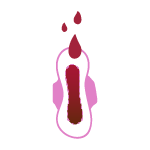
Dark red/brown
Old period blood from the beginning or end of your cycle

Black
Old period blood from the beginning or end of your cycle
Top tip: If you have any period blood colours that don’t look like your normal, then you should ask for support.
Everyone has a different flow, and it’s important that you notice your flow so that you know what is normal for you. Some people have light flows, whilst others are much heavier. If you struggle, it might be a sign that you might need some help.
A good indicator that your flow is very heavy is if you have to change your period product every hour or two. If you find this is the case, you should speak to your GP who will be able to help.

Light flow
Watery texture

Steady flow
No clots

Medium flow
Jelly-like

Heavy flow
Some clots

Very heavy flow
Lots of clots
Top tip: It’s important to buy the right products that fit with you and your flow! Find out more about choosing your perfect period product here and use our Period Product Locator to find free supplies near you.
Remember, if your bleeding changes and things aren’t what you’re used to, or if you’re struggling with a heavy flow, listen to your body. Just because something is normal for your friend, mum, sister or anyone you know who has periods, doesn’t mean it’s right for you. So, get some advice from your GP.
No one knows your Bloody Brilliant body like you do.


